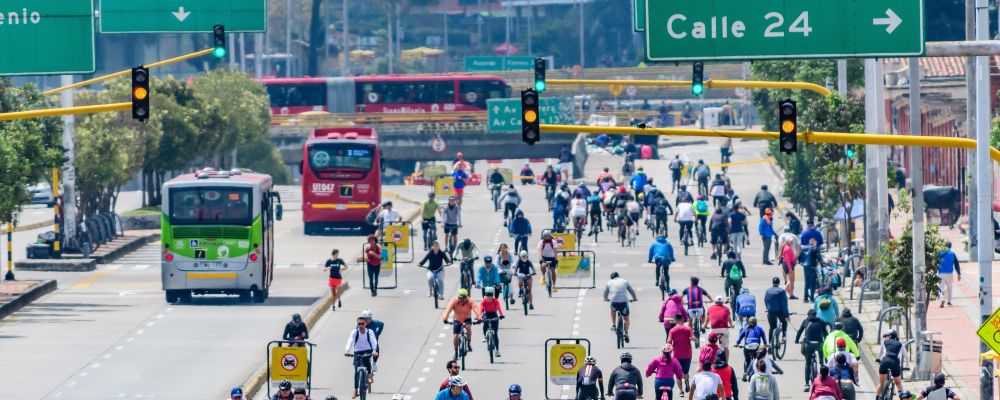
Special international day showcases how data-driven decision making, technology and AI can improve urban life.
On 31 October 2025, the global observance of World Cities Day takes place in Bogotá, Colombia, under the topic of people-centred smart cities. The day will showcase how data-driven decision making, technology and AI can be used to improve urban life and recover from current shocks and crises. It will also focus on promoting smart city initiatives centred on people.
This year’s theme reflects the growing recognition that the transformative power of digital technologies is reshaping urban life globally, offering profound opportunities to enhance how cities and human settlements are designed, planned, managed and governed. In an era marked by both urban and digital transitions, cities are increasingly adopting digital technology solutions and data to deliver better services for residents and address critical urban challenges and opportunities.
The aim of this year’s theme is to promote people-centred smart cities and demonstrate how crucial it is for smart cities to prioritise human needs, inclusivity and accessibility. Second, the day will provide a platform for cities to exchange best practices, experiences and strategies in implementing people-centred smart city initiatives globally, especially in addressing key challenges such as the global housing crisis.
Lastly, by increasing global awareness about the role of technology and innovation in advancing improved access to adequate housing and achieving urban development, the goal is to foster and encourage international cooperation and collaboration among all societal sectors on people-centred smart cities.
Speaking ahead of this year’s World Cities Day, Richard Vestner, vice president of industry solutions group, cities and water at Bentley Systems, said: “Cities are entering a defining moment. More than four billion people, over half of the world’s population, now live in urban areas, increasing demand for housing, transport and essential services. Yet three quarters of the infrastructure required by 2050 does not exist today.
“The choices made now will determine how cities respond to population growth, climate pressure and resource constraints in the decades ahead. Urbanisation and infrastructure are inseparable. The success of one depends on the resilience of the other. Cities that fail to plan and modernise risk widening social inequality and deepening environmental strain. Those that act decisively have the chance to create systems that are efficient, inclusive and responsive to the needs of their citizens.
“Digital transformation offers new tools to navigate this complexity. AI and digital twins allow decision makers to visualise infrastructure in real time, anticipate disruption and manage assets more intelligently. These capabilities can strengthen resilience, improve transparency and reduce the environmental footprint of urban growth.
“Ultimately, the future of cities will not be defined by technology alone but by how we apply it. People remain at the centre of progress. No technology scales on its own. The cities that thrive will be those that use data and insight to serve their citizens, not the other way around.”
The UN’s World Cities Day brings Urban October to an end on 31 October each year and was first celebrated in 2014. A global observance is held in a different city each year and the day focuses on a specific theme. It aims to raise international awareness of urbanisation trends, challenges and visions for sustainable urban development, promote international cooperation and contribute to global efforts to build equitable, prosperous, sustainable and inclusive cities that provide their communities with better living environments and quality of life.
UN-Habitat launched the 2024 edition of its World Cities Report at the World Urban Forum last year, focusing on the urgent intersection of climate action and rapid urbanisation. The biennial publication serves as a global reference on sustainable urban knowledge, revealing critical findings.
With a vast funding gap of $4.5-5.4 trillion needed annually for resilient infrastructure, the report also highlights the risks of “green gentrification” that can displace vulnerable communities. It emphasises the importance of community-led strategies to guide cities toward sustainable futures.