US cities are most expensive places in the world to build, as global construction demand shows resilience to geopolitical uncertainty.
Despite deglobalisation and geopolitical uncertainty, the international construction sector is proving resilient, benefiting from adaptable models built up during the past half-decade of volatility that can better manage costs and programmes in the face of disruption.
The Global construction market intelligence report 2025 from global professional services company Turner & Townsend shows some construction markets are benefitting from the turbulent economic headwinds. Investment is flowing into stable regions and longstanding markets, driving costs up, while countries choosing to near-shore manufacturing and build up local supply chains are also experiencing construction booms.
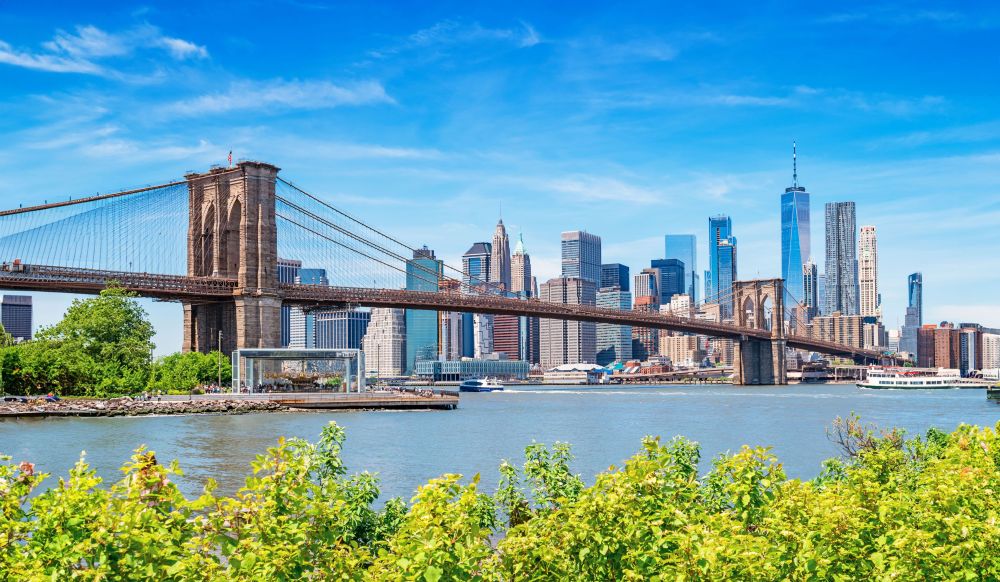
In the survey of 99 global cities’ construction markets, the US maintains a strong hold on the top rankings of the most expensive places to build. Five US cities are in the top ten. New York is in first place, with an average cost of $5,744 per square metre, followed by San Francisco at $5,504. Los Angeles ($4,786) is sixth, with Chicago seventh ($4,695) and Philadelphia in ninth ($4,604).
The costs are in part due to high construction labour costs across the US, averaging at $76 per hour, and rising as high as $US131.4 per hour in New York. This is being fuelled by a construction skills shortage of key specialists, as 87% of North American markets report shortages of mechanical, engineering and plumbing trades.
This is part of a wider global picture of demand for skilled labour outstripping supply, exacerbated by moves in many regions to restrict migration. 71 of 99 markets in the report declare that they’re experiencing a skills shortage, and this is helping keep average construction inflation above target – forecast to be 3.8% for 2025 and 4% in 2026.
Other markets appearing high up in the cost rankings include Zurich, Geneva and London at third, fourth and fifth places ($5,386 per square metre, $5,386 and $5,385 respectively). As well as the impact of elevated wages as seen in the US, costs in Western Europe and the UK are being kept high by strong construction demand as global investment seeks the relative stability of the region and domestic governments aim to accelerate industrial and defence capabilities.
The final country with cities in the top ten is Japan, which is seeing growth driven by the expansion of the country’s data centre market and other high-tech industries. Tokyo is the eighth most expensive market, at an average cost of $4,647 per square metre and is joined by four other Japanese cities in the top 15 (Sapporo, Osaka, Hiroshima and Fukuoka), making Japan the second most expensive country for construction globally, at an average construction cost of $4,514 per square metre.
Japan is one of several Asian markets that is benefitting from moves towards greater self-sufficiency in the age of deglobalisation. Manufacturing hubs like Vietnam, India and Malaysia are seeing significant uplifts in construction demand, partly encouraged by their comparatively low construction costs – $1,147 per square metre in Hanoi, $1,168 in Ho Chi Minh city and $723 in Mumbai.
Neil Bullen, managing director, global real estate, at Turner & Townsend, said: “We’re seeing shifting priorities and challenges across the globe. Geopolitical tensions and increasing polarisation are changing where and how investment flows. However, while uncertainty is limiting confidence in some regions, it is creating opportunities in others.
“Whether businesses are making tactical moves to reorient supply chains, or pivot to invest in high-growth sectors like defence, advanced manufacturing and data centres, construction remains crucial to global resilience and growth. Despite signs of increasing price stability and renewed activity in construction, we’re seeing a worldwide skills shortage that could put the brakes on growth. International labour could become less mobile as barriers to migration emerge, furthering adding to long-term dwindling of talent pools.
“To continue to deliver projects of unprecedented scale and complexity, agility and vigilance are vital. Clients need to try new approaches; from the foundational – investing more heavily in training local skills – to the innovative, such as piloting new AI tools or integrating digital solutions across the lifecycle of a project.”
Click here to download the Global construction market intelligence report 2025.